Retained Placenta: What Every Postpartum Doula Needs to Know About Natural and Ayurvedic Support

Recently I was shown again the effects of approaching this condition from an Ayurvedic approach. There are different stages or types of retained placenta. But when this condition is diagnosed early on those holistic tools make all the difference and can prevent medical interventions. So if you're a doula or birth worker, learn here about the natural and Ayurvedic tools that can support your clients. As it is in my opinion an essential part of comprehensive postpartum care.

What Is Retained Placenta?
After birth, the placenta is normally expelled within 30 to 60 minutes. When it doesn't — or when fragments remain in the uterus — it's called **retained placenta** (or retained products of conception, RPOC). It can occur because the uterus isn't contracting strongly enough, the placenta gets trapped behind a closed cervix, or in more serious cases, it has grown too deeply into the uterine wall. Left untreated, it can lead to infection, postpartum hemorrhage, and morenserious complications.
How Common Is It?
Retained placenta affects **0.5% to 4.8% of vaginal deliveries** — roughly 1 in 100 full-term births, and significantly more after preterm delivery (around 9%). Rates are also higher with a history of the condition or prior uterine surgery. Fortunately, it is not as common however as a postpartum doula, you will encounter this in your practice.
Recognizing the Signs
Know these warning signs so you can advise your clients to seek care promptly:
- Heavy or prolonged postpartum bleeding
- Foul-smelling vaginal discharge
- Fever, chills, or flu-like symptoms
- Pelvic pain or cramping days after birth
Diagnosis is confirmed by ultrasound. If any of these symptoms are present, immediate medical attention is essential.
---
Natural Approaches to Supporting Expulsion
These approaches are traditionally used to encourage uterine contractions and expel retained tissue. As a doula, your role is to educate and support — always in collaboration with the client's midwife or medical provider, and never in place of medical care.*
---
1. Breastfeeding and Skin-to-Skin Contact
The simplest and most immediate tool. Breastfeeding triggers the release of **oxytocin**, which stimulates uterine contractions. Encouraging your client to put baby to breast as soon as possible after birth — and frequently in the hours and days that follow — is one of the most evidence-supported ways to encourage placental expulsion and uterine involution. This is foundational postpartum doula support.
---
2. Castor Oil Packs
A time-honored naturopathic tool, castor oil packs applied to the lower abdomen are used by many holistic midwives and postpartum practitioners to stimulate circulation, encourage lymphatic flow, and support uterine muscle function.
How to use:
- Soak a flannel cloth in cold-pressed castor oil
- Place over the lower abdomen
- Cover with plastic wrap and a warm (not hot) heating pad
- Leave on for 45–60 minutes while resting
*Not recommended with active heavy bleeding or in the first days postpartum without midwife guidance.*
---
3. Ginger Tea
Ginger (Zingiber officinale) is a warming, circulatory herb with mild uterotonic properties — it gently encourages uterine tone while also supporting digestion and reducing postpartum nausea. It's a simple, accessible remedy that postpartum doulas can easily incorporate into their client support toolkit.
How to prepare:
- Simmer 3–4 slices of fresh ginger root in 2 cups of water for 10–15 minutes
- Strain, add honey and lemon if desired
- 2–3 cups per day
---
4. Motherwort Tea
Motherwort (Leonurus cardiaca) is a classic herb of herbal midwifery — a **uterine tonic** that helps the uterus contract and tone while simultaneously calming the nervous system. For postpartum clients experiencing anxiety alongside physical recovery, motherwort addresses both layers beautifully. Knowledgeable postpartum doulas have long recognized its dual action.
How to prepare:
- Steep 1–2 teaspoons dried motherwort in boiling water for 10 minutes
- Strain and drink 2–3 cups per day (it's bitter — honey helps)
*Not for use during pregnancy or with risk of excessive bleeding.*
---
5. Blue Cohosh — Practitioner Use Only
Blue cohosh (Caulophyllum thalictroides) is a powerful uterotonic with deep roots in indigenous North American birth traditions. Its active compounds stimulate uterine contractions and it has been used historically to help expel retained placenta or membranes.
**This is not a DIY remedy.** Blue cohosh carries real cardiovascular risks and must only be used postpartum, under the direct supervision of a trained herbalist, midwife, or naturopathic doctor. As a doula, your role here is to know it exists, understand its risks, and refer to the appropriate practitioner — not to administer it yourself. This is exactly the kind of nuanced clinical knowledge covered in depth in advanced postpartum doula training.
---
The Ayurvedic Perspective on Retained Placenta
This is where postpartum doula training gets truly transformative — and where Ayurveda offers a framework that modern postpartum care is only beginning to rediscover.
Ayurveda calls the postpartum period **Sutika Kala** — a sacred and vulnerable window that requires specific, systematic care. Ancient Ayurvedic texts are clear: a woman is not considered fully in the postpartum phase until the placenta has been completely expelled. The physical, emotional, and spiritual care that follows depends on this foundation being in place.
The Role of Vata Dosha
In Ayurvedic understanding, retained placenta is rooted in a **Vata imbalance** — specifically a disruption of **Apana Vayu**, the downward-moving energy responsible for birth, expulsion of the placenta, and the release of lochia. When Apana Vayu is weak or disturbed, the body cannot complete this natural process efficiently.
For postpartum doulas trained in Ayurveda, this framework doesn't replace medical understanding — it deepens it, giving you a language and a toolkit for supporting your clients that goes beyond what conventional postpartum care offers.
Ayurvedic Tools for Postpartum Doulas
These are the key Ayurvedic approaches used in the postpartum period to support uterine health and restore Apana Vayu to facilitate the expulsion of the placenta:
- Dashmool — a classical formulation of ten roots used in *Sutika Paricharya* (Ayurvedic postpartum care protocols) that moves Vata downward. It specifically targets issues in the lower abdomen and pelvis area, and supports uterine health. It can be taken as a decoction to drink but there are also Dashamoola oils that can be applied.
- (Panchakola) Ghee — deeply nourishing and Vata-pacifying, given in warm foods and drinks to support digestive strength. As improving digestion will help regulate Apana Vayu. This can indirectly help expel the placenta from the uterus.
- Abyhanga Sesame oil — warming and grounding, to stimulate circulation (clock wise motion on the abdomen), this encourages downward movement of Apana Vayu.
- Abyanga with Castor oil — even more potent and heating than sesame oil so not to be used when there is already an infection and only when discussed with a midwive or OBGYN. This practice supports uterine involution and balances Apana Vayu which both can help expel the placenta more fully.
- Warm spiced milk with fresh or dried ginger. Ginger is known to support digestion and bring in heat and in order to balance Apana Vayu. When your client is dealing with retained placenta I would recommend to use daily 3 cups of fresh ginger tea (1 inch grated and cooked for a few minutes in boiling water).
Abhyanga: The Postpartum Doula's Most Powerful Tool
Daily warm oil massage is one of the most transformative practices an Ayurvedic postpartum doula can offer to balance vata. Applied to the lower abdomen with medicated sesame oil, or castor oil (even more potent and heating so not to be used when there is already an infection). This practice supports uterine involution and balances Apana Vayu which both can help expel the placenta more fully.
---
When to Refer for Immediate Medical Care
As a postpartum doula, knowing when to escalate is non-negotiable. Direct your client to emergency care immediately if she experiences:
- Soaking more than one pad per hour
- Large blood clots
- Fever above 100.4°F
- Severe abdominal pain
- Dizziness, faintness, or loss of consciousness
- Signs of infection (foul odor, fever, chills)
Medical management typically involves manual removal of the placenta (MROP) under anesthesia. Your role as a doula is to support, refer, and advocate — never to delay necessary medical intervention.
---
Want to Offer This Type of Care to Your Clients?
The Ayurvedic tools described in this article — Herbal protocols, Abhyanga, Apana Vayu support, Sutika Kala frameworks — are not things that work without context. They require proper training to apply safely, and effectively.
The Ayurvedic Postpartum Doula Training is designed specifically for doulas and birth workers who want to go deeper — offering a complete, structured education in Ayurvedic postpartum care that you can begin using with clients immediately.
Inside the training you'll learn:
The full framework of Sutika Kala and why it matters for every postpartum client
How to identify and address Vata imbalances in the postpartum period
Abhyanga massage tailored for postpartum recovery
Vastra bandhana - The Ayurvedic way of belly binding
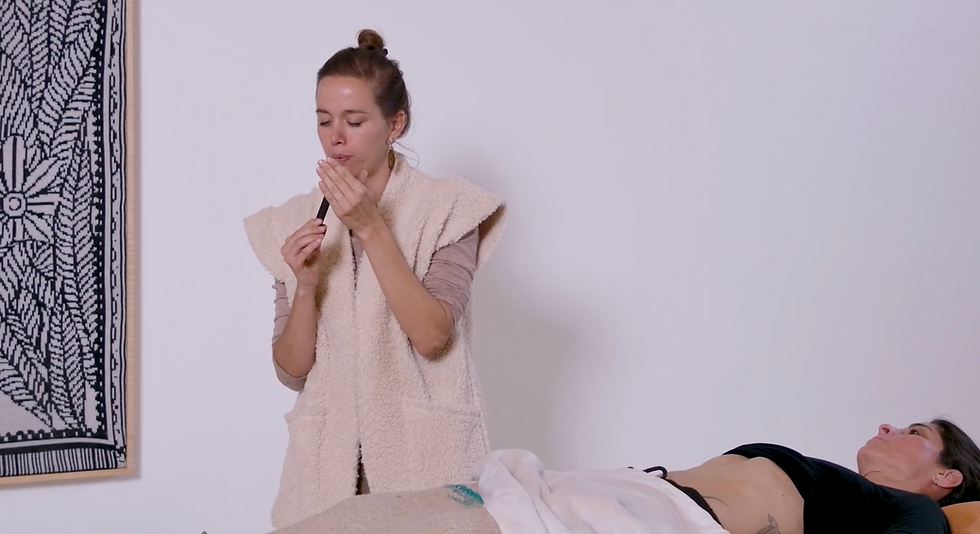
Womb moxa to support uterine involution
Sitz baths for perineal healing
Pinda sweda to improve circulation
Ayurvedic herbs, foods, and protocols for the first 42 days
How to confidently support complex postpartum situations — including retained tissue, postpartum depletion, and emotional recovery
Ayurvedic Postpartum Care recipes
👉 Learn more about the Ayurvedic Postpartum Doula Training here
---
Retained placenta is a serious condition — and it's also a powerful reminder of why postpartum care requires knowledge, skill, and depth. The women in your care deserve a doula who understands not just the practical, but the ancient wisdom that has supported new mothers for thousands of years.
---
*This article is for educational purposes only and does not constitute medical advice. Always work in collaboration with qualified medical providers.*


Comments