Abhyanga Postpartum Massage: Why Presence Matters More Than Technique


A guide for Ayurvedic postpartum doulas, bodyworkers, and anyone supporting new mothers through the fourth trimester.
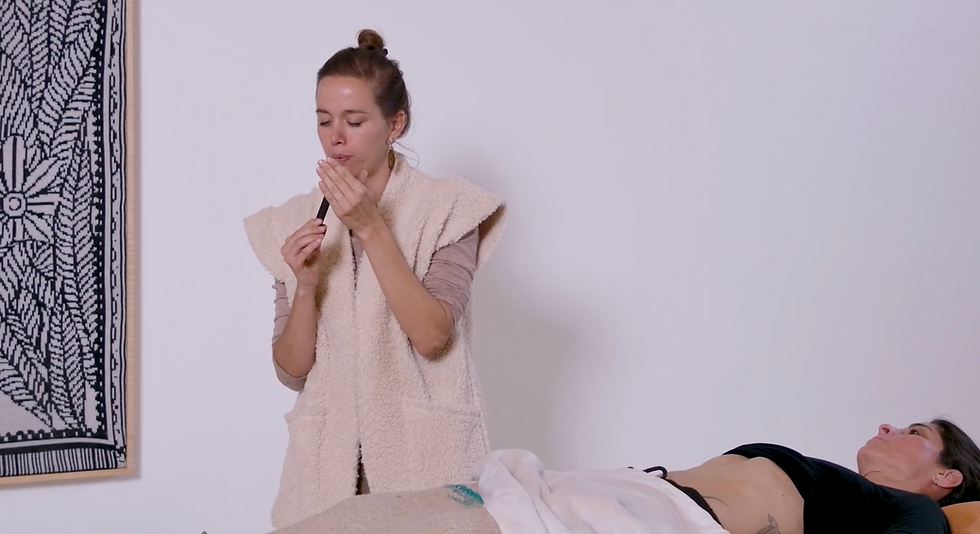
When most people think about learning postpartum massage, they think about learning techniques, strokes, sequences, and pressure. But in over a decade of working with new mothers through Ayurvedic Abhyanga and Zen Shiatsu bodywork, I have found that the single most powerful variable in a postpartum massage is not the stroke. It is the quality of presence the practitioner brings. The more the mind is activated the more likely that Vata is disrupted in you and the postpartum mother.
What Is Abhyanga?
Abhyanga is a full-body oil massage practiced in Ayurveda for over 5,000 years. The word comes from Sanskrit — "anga" (limb) and "abhi" (into/glow) — and is also known as snehana, from sneha, meaning both oil and love. That dual meaning matters: in Ayurveda, applying warm oil is an act of loving nourishment, not just physical therapy.
For postpartum women, Abhyanga is one of the most important treatments available in my experience. Mothers would instantly release and deeply relax. And often even fall asleep and after feel recharged. Childbirth elevates Vata dosha — the Ayurvedic energy governing movement, the nervous system, and sensory processing. The uterus becomes a large empty space, and Vata's qualities — lightness, dryness, coldness, mobility — flood body and mind. This is why new mothers so commonly experience anxiety, restlessness, insomnia, and emotional fluctuations. Abhyanga directly counteracts this by delivering the opposite qualities: warmth, weight, moisture, and steadiness.
The Benefits of Postpartum Abhyanga
Vata pacification: Warm oil and grounding touch reduce postpartum anxiety, dryness, restlessness, and fatigue.
Nervous system regulation: Slow, rhythmic and downward strokes, activate the parasympathetic nervous system and support emotional recovery.
Skin and tissue healing: Oils like sesame, ghee and Dhanwantaram Taila deeply hydrate, restore elasticity, and support tissue regeneration.
Circulatory and lymphatic support: Long strokes reduce swelling and improve energy recovery.
Muscle relief: Sustained contact and heat ease tension in the shoulders, hips, and lower back after labor.
Hormonal rebalancing: Deep relaxation supports the body's hormonal recalibration in the weeks following birth.
In traditional Ayurvedic postpartum protocols, daily Abhyanga is recommended for the first 42 days after birth. It can begin from day 3 postpartum (day 14 after cesarean) and continues through the full recovery period. In case your client had a cesarean birth you can gently massage legs and feet as soon as the postpartum mother feels comfortable as this can help with lymph drainage.
Choosing the Right Oil
Cold-Pressed Sesame Oil
The most accessible oil for postpartum Abhyanga. Rich in vitamins E and B complex, it hydrates, supports tissue regeneration, and soothes the nervous system. Its warming, heavy, lubricating nature directly counteracts Vata's cold, dry, mobile qualities — making it the classic choice for postpartum care. It has the Ushna (heating) potency (virya) so it is very effective.
Dhanwantaram Taila - the Primary Classical Postpartum Oil
The most specifically and repeatedly indicated oil for the Sutika period across all classical texts. The Ashtanga Hridayam describes it as the primary external preparation for postnatal recovery, applied through daily Abhyanga to restore strength to the musculoskeletal tissues, nourish the nervous system, support the return to normal physiological function, and reduce the excess Vata created by delivery.
Its formula combines a sesame base with Bala (Sida cordifolia), Ashwagandha, Dashamoola — the classical ten-root Vata-pacifying compound — and a range of secondary herbs, totalling fifteen to twenty-five depending on the source.
Practical note: most formulations contain ghee — verify before using with vegan mothers.
Bala Taila — for rebuilding strength
Bala means strength, and that is this oil's primary action. Massaging new mothers with Bala Taila as described in ancient texts provides physical, physiological, and psychological benefits including reducing pain and muscle tension, improving blood circulation, digestion, and milk production.
Its use is described across gynecological, obstetric, and neonatal contexts — making it one of the few oils indicated for both the mother and the newborn. Highly practical for postpartum doulas working with the whole family.
Ksheerabala Taila — for the nervous system and Pitta-sensitive mothers
Unique among postpartum oils in that it is prepared through a Ksheerapaka method — Bala root cooked first in milk, then in sesame oil — giving it a cooling quality unusual for a Vata-pacifying oil. Classical texts including the Ashtanga Hridayam and Sahasrayogam describe it as particularly nourishing for the nervous system. For postpartum recovery specifically, it nourishes the uterus and pelvic floor and supports the built up of the Dhatus (plasma, blood, muscle etc).
Its cooling nature makes it the better choice for mothers who run hot, show signs of inflammation or excess Pitta, or during warmer months. It pacifies both Vata and Pitta — relevant since childbirth disturbs both doshas.
Presence Over Technique: What Shiatsu Teaches Us About Touch
I have received Abhyanga massages that were technically flawless — every stroke correct, every movement precise — yet they felt deeply Vata-disturbing. The touch was applied, but not inhabited. And I have been held by someone with no formal training at all, and my entire system softened.
Technique does not regulate the nervous system. Presence does.
Zen Shiatsu teaches practitioners to work from the hara — the body's energetic center — rather than from memorized sequences. A significant part of Shiatsu training is devoted to energetic attunement: learning to sense where a person's energy is deficient or blocked, and what quality of contact the tissue is actually asking for. This is cultivated through the practitioner's own embodiment practices — meditation, breathwork, somatic awareness — not through additional technique repetition.
Our training manual states it plainly: "Remind yourself that intuition brings you to the best massages. Not your mind nor techniques."
5 Core Principles for Postpartum Ayurvedic Doulas:
Root yourself before you touch her: Ground through your hara and feet first. Your nervous system sets the tone for hers before the massage begins.
Attune before you stroke: The first touch is a question, not a technique. Hold, sense, and listen.
Warm oil is medicine: Temperature is therapeutic. Cold oil on a Vata-elevated mother works against the treatment. Always warm it fully.
Move slowly and downward: Long, grounding strokes along the limbs and spine bring scattered Vata energy home. Speed is counterproductive.
Your stillness is the treatment: Meditation may be more powerful preparation than any additional technique. Your regulated presence is what she needs most.
Ready to dive deeper into Ayurvedic protocols for postpartum healing?
The work begins not with technique, but with a hypnosis session on: what is your natural gift? Start with the meditation to discover your unique postpartum healing gift so that you can create the services that fit your natural state of being without compromising yourself.
The Ayurvedic Postpartum Doula training is designed for birth workers, bodyworkers, yoga teachers, nurses, midwives, and anyone called to support women in the postpartum period through an Ayurvedic framework. Prior knowledge of Ayurveda is not required.
The curriculum covers:
The Ayurvedic foundations to regulate yourself and the new mother
Dravyaguna (nutrition and herbs for postpartum healing)
Abhyanga massage
Vaginal and perineal healing
Belly binding (Vastru Bandhana)
Pinda Sweda
Womb moxa to support uterine involution
Birth imprint meditations to discover your patterns and bias as a provider
Energetic practices to overcome challenges in building a practice that is sustainable for you
Frameworks to built a clear offering and service that can sustain you
Learn more about the training program and upcoming intake dates.
Keywords: Ayurvedic postpartum doula training, Abhyanga postpartum massage, postpartum Vata dosha, postpartum massage training online, Ayurvedic doula certification, postpartum oil massage, snehana postpartum, Shiatsu postpartum bodywork, postpartum nervous system regulation, Dhanwantaram oil postpartum


Comments